


• MY BLOG
  • BOOKS & ARTICLES
    • Books by Andrew Fraknoi
    • Articles for the Public
    • Articles for Educators
    • Classroom Activities on Astronomy
  • RESOURCE GUIDES
  • CONSULTING
    • Non-technical Talks on Astronomy
    • Developing Resource Guides
    • Writing Web-based Articles
    • Giving Talks on Astronomy Education
  • CLASSES & LECTURES
    • Classes I Teach
    • Silicon Valley Astronomy Lecture Series
    • Public Lectures I Give
  • GALLERIES
    • Solar System Images
    • Nebula and Galaxy Images
    • Bumper Stickers for Astronomy
    • Pictures with Astronomers
  • AUDIO & VIDEO
    • Radio Programs & Podcasts with Andrew Fraknoi
    • Videos of Talks and Interviews
  • SCIENCE FICTION
Type and hit ENTER

Be Yourself. Be Happy.

Of the grand order of folio leviathans, the Sperm Whale and the Right Whale are by far the most noteworthy. They are the only whales regularly hunted by man. To the Nantucketer, they present the two extremes of all the known varieties of the whale. As the external difference between them is mainly observable in their heads; and as a head of each is this moment hanging from the Pequod's side.

Stay Positive. Always.

Of the grand order of folio leviathans, the Sperm Whale and the Right Whale are by far the most noteworthy. They are the only whales regularly hunted by man. To the Nantucketer, they present the two extremes of all the known varieties of the whale. As the external difference between them is mainly observable in their heads; and as a head of each is this moment hanging from the Pequod's side.

  • MY BLOG
  • BOOKS & ARTICLES
    • Books by Andrew Fraknoi
    • Articles for the Public
    • Articles for Educators
    • Classroom Activities on Astronomy
  • RESOURCE GUIDES
  • CONSULTING
    • Non-technical Talks on Astronomy
    • Developing Resource Guides
    • Writing Web-based Articles
    • Giving Talks on Astronomy Education
  • CLASSES & LECTURES
    • Classes I Teach
    • Silicon Valley Astronomy Lecture Series
    • Public Lectures I Give
  • GALLERY
  • AUDIO & VIDEO
    • Radio Programs & Podcasts with Andrew Fraknoi
    • Videos of Talks and Interviews
  • SCIENCE FICTION
GET CONNECTED
  • MY BLOG
  • BOOKS & ARTICLES
    • Books by Andrew Fraknoi
    • Articles for the Public
    • Articles for Educators
    • Interdisciplinary Articles (Astronomy & the Humanities)
    • Classroom Activities on Astronomy
  • RESOURCE GUIDES
  • CONSULTING
    • Non-technical Talks on Astronomy
    • Developing Resource Guides
    • Writing Web-based Articles
    • Giving Talks on Astronomy Education
    • Organizing Conferences or Workshops
  • CLASSES & LECTURES
    • Classes I Teach
    • Silicon Valley Astronomy Lecture Series
    • Public Lectures I Give
  • GALLERIES
    • Solar System Images
    • Nebula and Galaxy Images
    • Bumper Stickers for Astronomy
    • Pictures with Astronomers
  • AUDIO & VIDEO
    • Radio Programs & Podcasts with Andrew Fraknoi
    • Videos of Talks and Interviews
  • SCIENCE FICTION
What’s Coming in the Sky in 2026?
Share
A total eclipse of the Moon
Astronomy, Eclipse, Planets, Sky Phenomena, Space Science, Telescopes

What’s Coming in the Sky in 2026?

January 10, 2026
-
Posted by Andrew Fraknoi

We are all hoping for a better 2026 on Earth than 2025 was.  But what will happen in the sky this year?  Total eclipses of the Moon and Sun, a good meteor shower in August, and if all goes well, the first human flight around the Moon in many decades.

Taking the highlights in order:

  • During the night of March 3, the Moon’s path will lead it into Earth’s shadow, causing a total eclipse of the Moon (sometimes called a blood moon by the media because of the dark red color of the Moon’s disk.)  Unfortunately this eclipse will be total between 3 and 4 am on a Tuesday morning, so viewers are likely to be very tired at work or school the next day.
  • Just after sunset, on Sunday, March 8, the planets Venus and Saturn will get closest in the sky, with the distance between them being about the width of your thumb held at arm’s length. They are, of course, not actually close, orbiting the Sun at very different distances. Their paths just happen to intersect in the sky. Look toward the west-southwest to find the pair.
  • Sometime this spring, if all the parts continue to be flight ready, NASA’s Artemis program will launch four astronauts to take a 10-day trip around the Moon and back.  This will be the first crew to visit the neighborhood of the Moon since 1972 and the first ever to include a woman and a person of color.
  • On July 25, the Japanese spacecraft Hayabusa 2 will fly by an asteroid called Torifune, which is one of a class of small rocky bodies whose orbit can cross the Earth’s.  Astronomers always want a better understanding of these “near-Earth asteroids,” in case one of them once again impacts our planet.  It will be a very fast flyby, but will get within 60 miles of its target.  (Sometime in July, the Chinese spacecraft Tianwen2 will also rendezvous with an asteroid.)
  • On August 12, a small section of planet Earth will be treated to a total eclipse of the Sun, when the Moon’s disk happens to exactly cover the Sun’s disk, and day turns into night.  The total eclipse will be visible in parts of Iceland, Greenland, and Spain (and connecting oceans), but the bad news is that the eclipse this time will last only 2 minutes at best, and often less from some places. But eclipse fanatics have nevertheless been making reservations along the path for many months now.
  • August 13 will be the peak of what may turn out to be the best meteor shower for the average viewer for 2026.  It’s summer in the Northern Hemisphere with warm temperatures and on this date, the Moon will be in its new phase (no moonlight visible).  If you let your eyes get adapted to the dark, and find an open field or other setting where you can see a lot of sky at once, you should be able to see quite a few “shooting stars.”  The streaks in the sky come about when chunks of dirt and rock from this swarm, called the Perseids, hit the Earth’s atmosphere. (And the shower is often good a few nights before and few nights after the peak night.)

For astronomers, 2026 is also exciting overall because it is the year the Vera Rubin Observatory in the high mountains of Chile, which boasts the largest digital camera ever built, will really start on its 10-year program to make the Greatest Movie Ever Filmed.  Every three days, this remarkable camera will photograph the entire sky, and then those full-sky views will be stitched together into a movie sequence.  That will show astronomers anything and everything that changes in the sky — new asteroids moving across our field of view, new comets, or stars that explode or flare up.  We expect thousands of discoveries every year!

And sometime during the year, both NASA and the Chinese Space Agency hope to launch new space telescopes to complement the Hubble and Webb telescopes that are already out there making fabulous discoveries. Plus there will be launches of a range of new rockets, being tested for ambitious future space missions.

It can sometimes be hard to hear all the news of what’s happening on Earth.  But, as the old bumper sticker said, it’s always true that “Astronomy is Looking Up!”


January 10, 2026

Related Posts

Other posts that you should not miss.
Asteroids, Astronomy, Comets

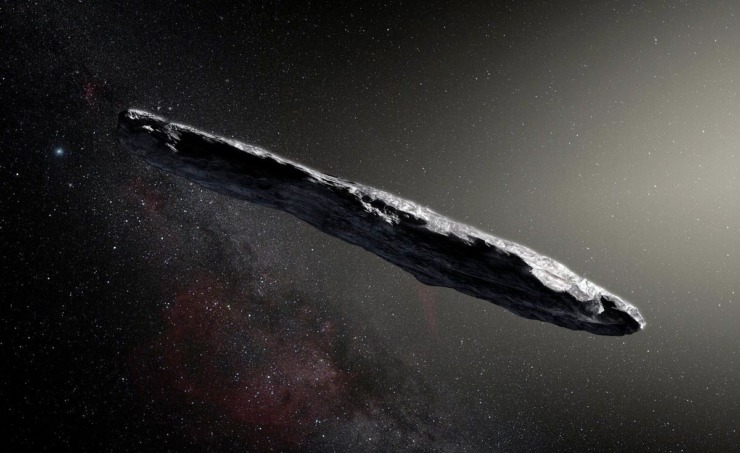
First Visitor from the Realm of the Stars Ever Found Is Oddly Shaped

December 6, 2017
-
Posted by Andrew Fraknoi

Astronomers around the world have been observing a small but fast object that gives every indication of coming …
Read More
December 6, 2017
Posted by Andrew Fraknoi
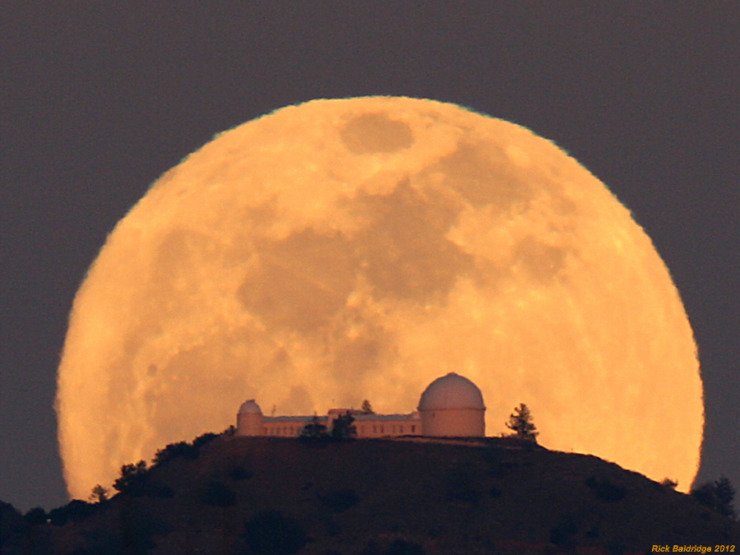
Full Moon, Lick Observatory
Astronomy, Moon, Sky Phenomena

New Year’s Day Full Moon will be a “Supermoon”

December 30, 2017
-
Posted by Andrew Fraknoi

     By a cosmic coincidence, the first day of 2018 will have a nice full Moon …
Read More
December 30, 2017
Posted by Andrew Fraknoi
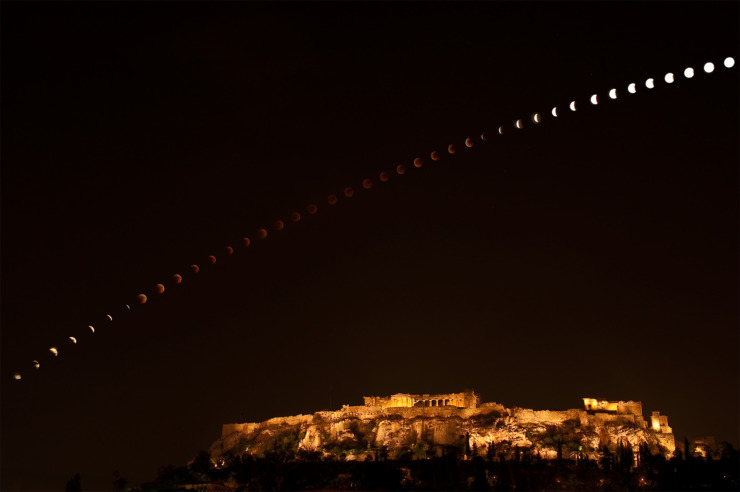
lunar eclipse, eclipse of the Moon,
Astronomy, Eclipse, Moon, Sky Phenomena

Total Eclipse of a Blue Supermoon on January 31

January 26, 2018
-
Posted by Andrew Fraknoi

On Wednesday morning, January 31, residents of North America (and particularly those on the west coast) will experience …

Read More
January 26, 2018
Posted by Andrew Fraknoi
← PREVIOUS POST
Webb Telescope Shows Glittering, Massive Cluster of Galaxies
NEXT POST →
Winter Solstice Arrives on Sunday Dec 21

"*" indicates required fields

This field is for validation purposes and should be left unchanged.

Subscribe to my blog!

Name*

RECENT POSTS
  • Webb Telescope Shows Glittering, Massive Cluster of Galaxies
    January 23, 2026

    A delightful new James Webb Space Telescope image of a massive galaxy cluster

  • Winter Solstice Arrives on Sunday Dec 21
    December 18, 2025

    Dec. 21 is the winter solstice. We explain what this means and how the seasons come about.

  • A Course Via Zoom on Atomic Science for Everyone
    September 20, 2025

    I am teaching a new Zoom course on the mysterious world of the atom, …

  • Logo for a 1-day meeting on the future of astronomy
    A 1-Day Virtual Symposium on Future of Astronomy
    August 7, 2025

    For those of you with a deeper interest in astronomy and how we learn …

  • Virgo Cluster (part) from the Rubin Observatory
    New Telescope to Take Movie of Entire Sky
    June 24, 2025

    Astronomers unveiled first pictures from the amazing Rubin Observatory, which is getting ready to take the deepest, widest movie of the entire sky.

Archives
  • HOME
  • ABOUT ME
  • CONTACT ME
  • FAVORITE LINKS

© Copyright 2025 | All Rights Reserved

What's Coming in the Sky in 2026?